If you’re shopping for kitchen countertops in Atlanta, you already know there’s no shortage of options — materials, fabricators, showrooms, and big-box stores all competing for your attention. This guide cuts through the noise. We’ll walk you through the major countertop materials, what to look for in a fabricator, how pricing works, and the steps from first visit to final installation. Whether you’re building new or renovating, this is your roadmap.
The Major Countertop Materials (Quick Overview)
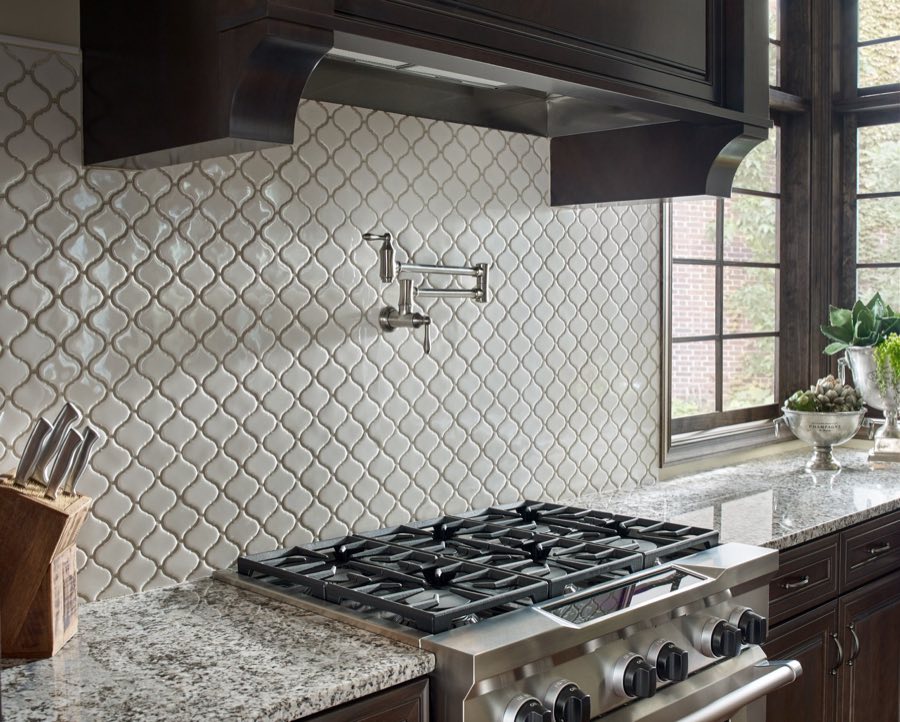
Granite
Granite is a natural stone prized for its unique veining and warm, rich colors. Each slab is one-of-a-kind, giving your kitchen a truly personal touch. It’s extremely heat resistant — you can place a hot pan straight from the stove without worry. However, granite is porous and requires periodic sealing to prevent staining and bacterial growth. Best for homeowners who want undeniable natural beauty and don’t mind a small amount of maintenance.
Quartz
Quartz is an engineered stone made from crushed quartz, resins, and pigments. It’s non-porous, which means it naturally resists stains, bacteria, and doesn’t need sealing. The surface is consistent and polished to perfection, available in a vast range of colors and patterns. Quartz is ideal for busy families who want beauty without the maintenance burden, though it’s slightly less heat-resistant than granite (use a trivet for very hot pans).
Quartzite
Quartzite is a natural stone that looks like marble but boasts the hardness of granite. It’s an excellent choice if you love the elegant, soft aesthetics of marble but need something that can stand up to heavy daily use. Quartzite is heat resistant, durable, and increasingly popular among Atlanta homeowners seeking a premium natural-stone option. It does require sealing like granite and comes at a higher price point.
Marble
Marble is the hallmark of timeless elegance and luxury. Its soft, flowing patterns have adorned kitchens and bathrooms for centuries. However, marble is softer than granite and more prone to scratching, etching, and staining. Many Atlanta homeowners opt for marble as an accent countertop (like an island) paired with a more durable material for the main work surfaces. It’s popular for bathrooms and statement pieces.
Soapstone
Soapstone is a natural stone with a distinctive matte finish and soft gray or charcoal color. It’s heat resistant and naturally resistant to bacteria and staining. Over time, soapstone develops a patina — a darkening of the surface that many homeowners find beautiful and character-filled. It’s a niche choice but beloved by those who appreciate its unique aesthetic and low-maintenance properties.
Want a deeper dive into material comparisons? Check out our complete granite vs. quartz comparison. For a full gallery of material options, visit our Stone Gallery.
Granite vs. Quartz Comparison →
What to Look for in an Atlanta Countertop Company?
- In-house fabrication: Does the company cut, polish, and edge stone themselves, or do they outsource fabrication? In-house shops offer better quality control, faster turnaround, and the ability to customize edge profiles and handle special requests.
- Templating technology: Modern shops use laser or digital templating for precision. Manual templating increases the risk of measurement errors. Precision matters — even a quarter-inch error can throw off your sink cutout or cooktop fit.
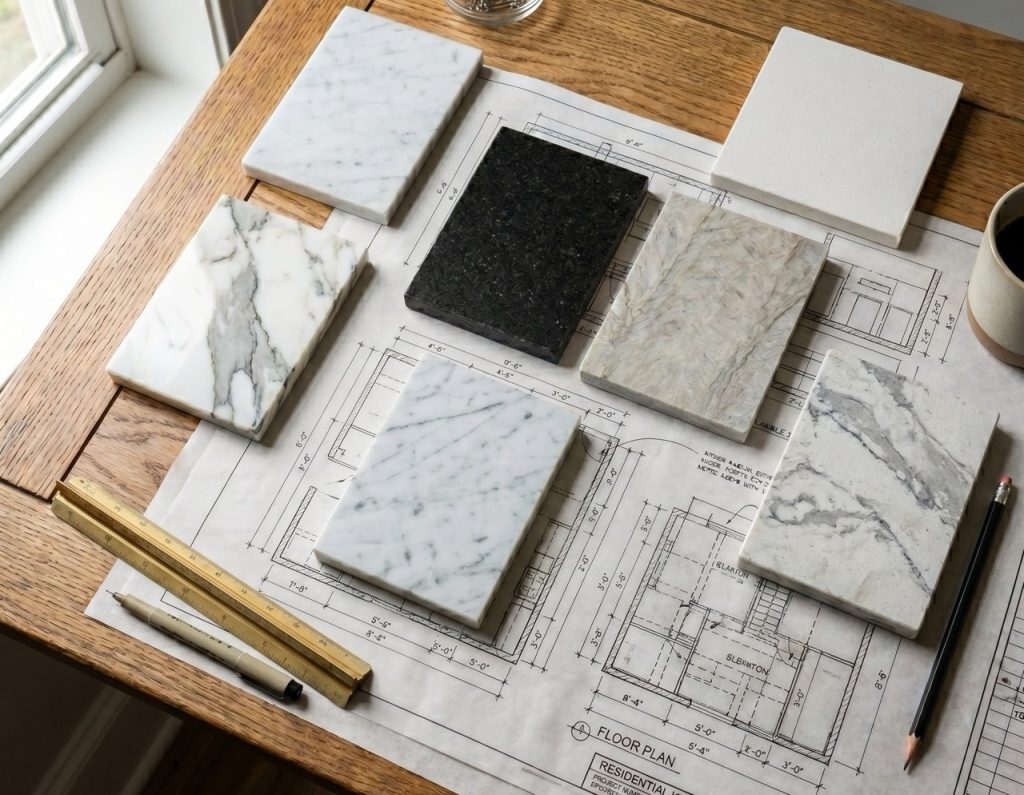
- Material selection and showroom: Can you see full slabs, not just tiny samples? A good showroom lets you view materials under different lighting and touch the actual finish you’ll receive. Samples can be misleading.
- Installation experience and warranty: Ask how many installations they do per week and how long they’ve been in business. A solid warranty (typically 1–5 years on fabrication and installation) shows confidence in their work.
- Reviews and local reputation: Check Google reviews, the Better Business Bureau, and ask for references. Word-of-mouth is invaluable in Atlanta’s home renovation community.
Top South has provided countertops to Atlanta-area homeowners for decades. We handle fabrication in-house, use digital templating, maintain an expansive Designer Showroom where you can see full slabs, and back our work with a comprehensive warranty.
How Countertop Pricing Works?
Understanding the breakdown of countertop costs helps you compare quotes and make informed decisions.
- Price per square foot: Countertops typically range from $40–$150+ per installed square foot, depending on material. Basic laminate might start at $40–$60/sq ft. Natural stones like granite run $80–$130/sq ft. Exotic granite, quartzite, or premium quartz can exceed $150/sq ft.
- Material grade and rarity: Not all granite slabs are priced equally. A basic-grade slab costs less than a premium or exotic grade with unique veining or rare coloring.
- Edge profiles: A simple straight edge is standard, but polished, beveled, ogee, and waterfall edges cost more.
- Cutouts and features: Sink holes, cooktop cutouts, integrated drainboards, and apron sinks each add to the fabrication cost.
- What’s included vs. extra: Some quotes include templating, demolition of old counters, plumbing disconnect, and installation. Others charge separately. Always clarify what’s included in the quoted price.
Why is the cheapest quote not always the best value? Lower-cost shops may cut corners on templating, use lower-grade materials, or rush installation. A slightly higher quote from a reputable fabricator often means better materials, precision workmanship, and peace of mind.
The Countertop Buying Process: Step by Step
- Research materials and narrow your preferences. Browse countertop materials online — our Stone Gallery has high-quality photos and descriptions of every material type.
- Visit a showroom to see and touch materials in person. Come to our Designer Showroom in Marietta to view full slabs under different lighting.
- Schedule a professional in-home measurement and template. A technician will visit your kitchen, measure precisely, and create a template of your countertop layout.
- Select your slab. Some fabricators (including Top South) let you hand-pick your slab from the warehouse, ensuring you get the exact pattern and color you want.
- Fabrication phase. Once your slab is selected, cutting, polishing, and edge work begin. Most projects take 1–2 weeks from template to completion.
- Installation day. Professional installers remove your old counters (if applicable) and carefully set your new ones. Most kitchen installations are completed in a single day.
- Enjoy your new countertops! After installation, sealing (if needed), cleanup, and a final walkthrough complete the project.
Kitchen Countertop Trends in Atlanta (2026)
- Quartz dominance continues: Low-maintenance quartz remains the most popular choice among Atlanta homeowners, especially those with busy lifestyles.
- Quartzite gaining momentum: More homeowners are discovering quartzite as a natural-stone alternative that bridges the gap between marble’s elegance and granite’s durability.
- Waterfall edges and thick slabs: Waterfall edges (where the countertop curves down the side of an island) and 2–3 inch thick slabs are increasingly requested for a bold, contemporary look.
- Light and neutral tones dominate: White and light gray remain the top choices, but warm earth tones — soft creams, taupes, and even greens — are making a comeback.
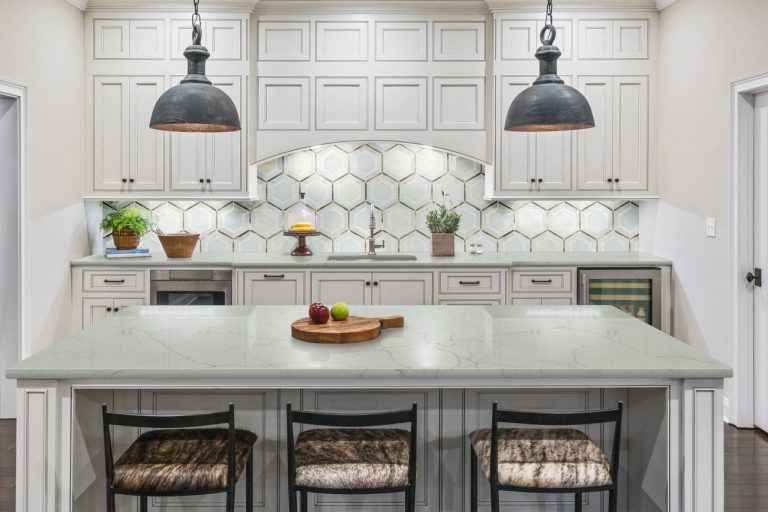
- Integrated sinks and seamless backsplashes: Seamless transitions — like matching the countertop material up the backsplash and into an integrated sink — create a cohesive, high-end look.
Where to See Countertops in Person?
One of the most important steps in choosing countertops is seeing and touching full slabs in person. Tiny samples can’t capture the true color, veining, and feel of stone. Seeing full slabs under different lighting conditions gives you a much clearer picture of what you’re getting.
Top South’s Designer Showroom in Marietta is a 5,000+ square foot showcase of premium countertop materials. Browse full slabs of granite, quartz, quartzite, marble, and soapstone. Our material experts are on-site to answer questions and help you find the perfect match for your kitchen’s style and your lifestyle.
We serve all of Atlanta’s metro area, including Marietta, Kennesaw, Roswell, Alpharetta, and beyond. Whether you’re in a Buckhead penthouse or a suburban ranch, we bring quality craftsmanship to every project.
Ready to explore countertop options for your kitchen?
Frequently Asked Questions on Choosing Kitchen Countertops in Atlanta
How long does it take to get new kitchen countertops installed?
From your first showroom visit to installation day, the typical timeline is 2–4 weeks. This includes in-home templating (1–2 days), slab selection, fabrication (1–2 weeks), and installation (usually completed in a single day for standard kitchens). Rush timelines may be available depending on material availability.
What’s the best countertop material for a busy family kitchen?
Quartz is the top choice for busy households. It’s non-porous, never needs sealing, resists stains, and cleans up with just soap and water. If you prefer natural stone, granite is also excellent — just plan for annual sealing. Visit our Stone Gallery to compare options side by side.
Do I need to replace my cabinets when getting new countertops?
Not necessarily. If your existing cabinets are structurally sound and level, new countertops can be installed directly on top. Your fabricator will assess cabinet condition during the templating visit. If cabinets need reinforcement (especially for heavier stone), that can usually be done without full replacement.
How do I choose between so many countertop colors and patterns?
Start by bringing photos of your kitchen — cabinets, flooring, backsplash, and paint colors — to the showroom. View full slabs (not just samples) under different lighting. Our material experts at the Designer Showroom can help narrow your choices based on your style preferences and how the stone will look in your specific space.
What should I ask when getting countertop quotes?
Key questions: Is fabrication done in-house or outsourced? What’s included in the price (templating, demolition, plumbing disconnect, installation)? What warranty do you offer? Can I hand-pick my slab? Do you use digital or manual templating? These questions help you compare quotes on an apples-to-apples basis.