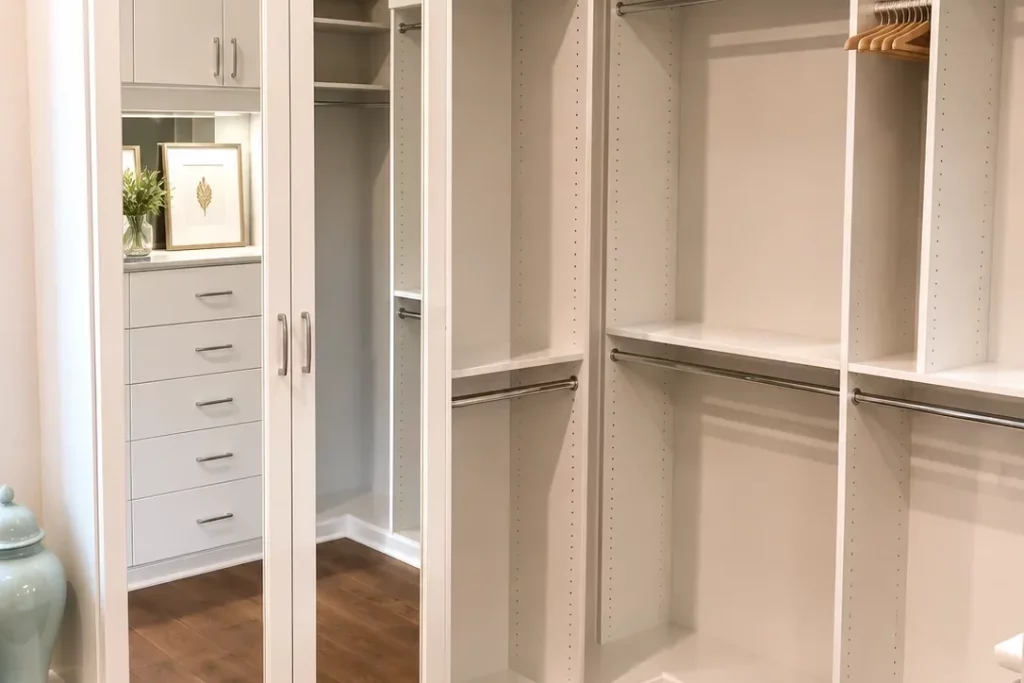
A small closet can hold a lot more than you might expect. Most of the trouble with a small closet is not the size. It is the standard setup: one rod, one shelf, and a floor that collects everything that does not fit. With a plan that matches the space to what you own, even a two-foot reach-in can work hard. This guide covers practical small closet solutions you can use in a bedroom, hallway, entry, or kids’ room.
Start With What You Own
Before you change anything, sort what lives in the closet into groups: long-hang items (dresses, coats), short-hang items (shirts, jackets, folded pants on hangers), folded clothes, shoes, and accessories. Note roughly how much of each you have. Then measure the closet’s width, depth, and ceiling height.
Those two lists, what you own and the space you have, drive every other decision. A closet with mostly shirts and jackets needs a very different layout from one that holds coats and boots.
Use the Full Height of the Closet
In many small closets, the space above the shelf and the floor below the clothes go mostly unused. Carrying adjustable shelving up toward the ceiling adds storage without taking any floor space. Use the highest shelves for seasonal clothes, luggage, and items you reach for a few times a year, and keep everyday items lower.
Adjustable shelves matter here. A closet that changes with the seasons, or with a growing child, should be able to change with you.
Double-Hang Most of Your Clothes
Shirts, jackets, skirts, and folded pants take up only about half the height of a standard closet. Two rods, one above the other, roughly double the hanging space in the same width. Keep a shorter section of long-hang for dresses and coats, sized to what you actually own, and give the rest of the width to double-hang.
Swap the Dresser for Drawers
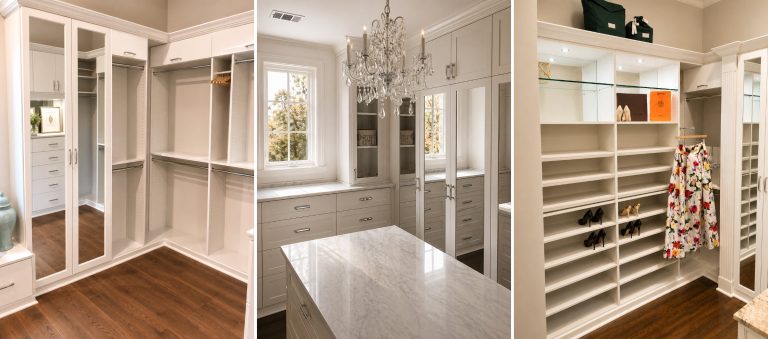
A drawer stack inside the closet can stand in for a dresser, which frees up floor space in the bedroom. Drawers keep folded clothes, socks, and accessories out of sight and easy to find. In a reach-in, a drawer stack often fits best at one end or in the center, with hanging space on either side.
Give Shoes and Accessories Their Own Place
Shoes on the closet floor are one of the most common small-closet problems. Dedicated shoe shelves keep pairs visible and the floor clear. Belts, ties, scarves, and bags also need a home, or they end up on a shelf in a pile. Plan a spot for each, so putting things away takes no thought.
Make the Corners Work
Corners are where storage gets lost. In a reach-in that is wider than its door opening, the ends of the closet can be hard to see and reach. Shelving or a short hanging section at each end makes that space useful, and placing the things you use less often there keeps your everyday items front and center.
Choose the Right Doors
Doors affect how much of the closet you can use at once. Hinged doors open the full width of the closet but need room in front to swing. Sliding doors take no floor space, which helps in a tight bedroom or hallway, but open only one side at a time. Mirrored doors can double as a full-length mirror and make a small room feel brighter.
Add Lighting
A dark closet hides what you own. Lighting built into the closet lets you see the back of every shelf and tell navy from black in the morning. In a small space, good lighting also makes the closet feel larger and easier to keep organized.
Small Closets Around the House
The same ideas work beyond the bedroom:
- Hall and linen closets: adjustable shelves sized for towels, sheets, and supplies, with labeled bins on the higher shelves.
- Entry and coat closets: a single rod for coats, a shelf above for hats and gloves, and shoe storage below.
- Kids’ closets: rods and shelves set lower now and moved up as they grow.
- Pantries and laundry rooms: see our custom pantries and laundry room pages for ideas that apply to small spaces.
Common Small-Closet Mistakes
- Keeping the single rod and shelf. It wastes the space above the shelf and below the clothes.
- Shelves that are too deep. Items get lost at the back. Size shelf depth to what sits on it.
- Fixed shelves and rods. What you store changes, so the closet should be adjustable.
- Using the floor as storage. Shoes and bins on the floor make a small closet feel smaller.
- Squeezing in a walk-in. If there is not room for storage plus a comfortable aisle, a well-planned reach-in often works better. Our guide to walk-in vs. reach-in closets covers how to decide.
A Quick Small-Closet Checklist
- Sort what you own into long-hang, short-hang, folded, shoes, and accessories.
- Measure the width, depth, and ceiling height.
- Plan double-hang for most of your hanging clothes, with a short long-hang section.
- Carry adjustable shelving toward the ceiling.
- Add a drawer stack if the closet can replace a dresser.
- Give shoes and accessories their own spots.
- Pick doors that suit the room, and add lighting.
Plan Your Small Closet at Our Showroom
Small closet solutions are easier to picture in person. At our Marietta showroom at 830 Pickens Industrial Drive, you can see hanging, shelving, and drawer configurations, along with door styles, finishes, and hardware. The showroom is open Monday through Friday, 8 AM to 4 PM.
Every Top South closet is designed around your space, built in our own Marietta facility, and installed by our own crews. See examples on our custom reach-in closets page, explore our custom closets and storage options, or call 770-422-4009.