Atlanta homeowners renovating kitchens face a common decision , granite or quartz? Both are excellent materials with distinct advantages. This guide compares them across every factor that matters: durability, maintenance, appearance, cost, and resale value. Whether you’re updating a kitchen in Marietta, Alpharetta, Kennesaw, or anywhere in the greater Atlanta area, understanding the differences between granite and quartz will help you make a confident choice that matches your home, lifestyle, and budget.
Top South carries both materials in our Stone Gallery and showroom, and we’ve helped hundreds of Atlanta homeowners select the perfect countertop material. This guide covers everything you need to know to decide between granite and quartz.
What Is Granite? (Natural Stone Basics)
Granite is 100% natural stone, quarried directly from the earth and cut into slabs. Each granite slab is completely unique — no two pieces have identical veining, color variation, or mineral composition. This natural variation is a major part of granite’s appeal.
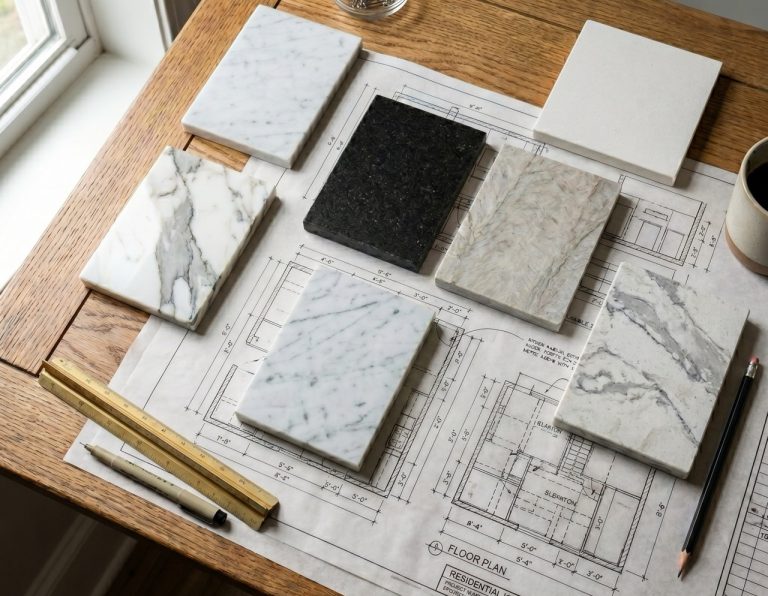
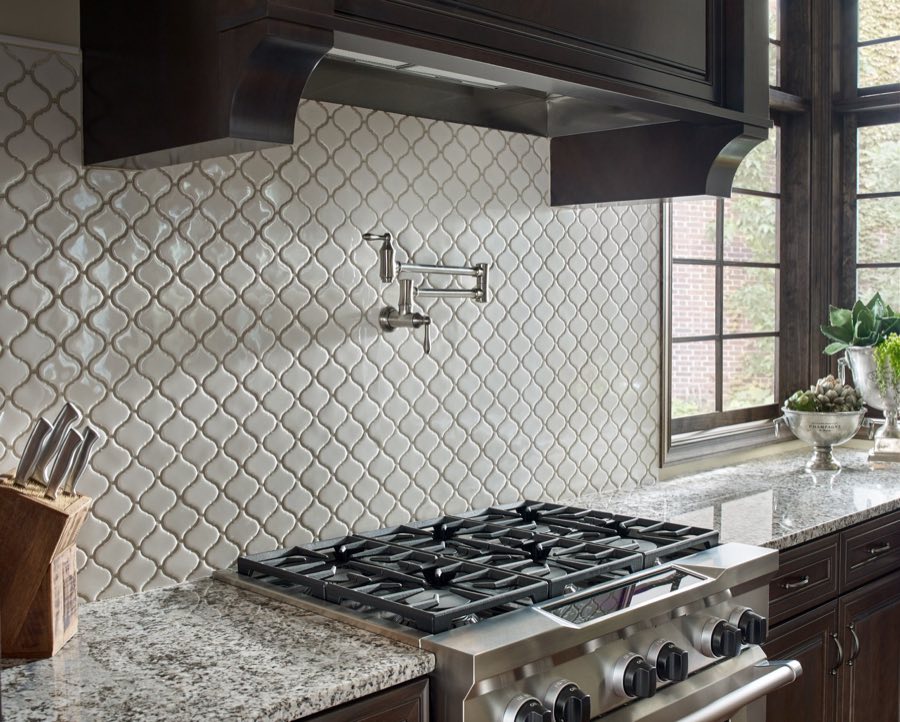
Granite is composed of feldspar, quartz, and mica minerals, which create its distinctive speckled appearance. It’s available in a stunning range of colors: from light grays and whites to rich blacks, dramatic blues, warm golds, and everything in between. Some granite options even feature bold veining that rivals natural marble.
One important characteristic: granite is porous, which means it has microscopic pores that can absorb liquids. This is why granite countertops must be sealed periodically — typically once a year, though high-traffic kitchens may benefit from sealing every 6–9 months. The sealer protects against stains and water damage.
On the bright side, granite is incredibly heat resistant. You can place a hot pan directly on granite without any risk of damage, a convenience many cooks appreciate.
Visit our Stone Gallery to browse granite options from premium suppliers. You can see the full range of colors and finishes available.
Browse the Top South Stone Gallery →
What Is Quartz? (Engineered Stone Basics)
Quartz is engineered stone, manufactured from roughly 90–94% ground quartz crystals combined with polymer resins and pigments. This engineered composition gives quartz several distinct advantages over natural stone.
Quartz is non-porous, meaning it never absorbs liquids. This makes it extremely stain-resistant and eliminates the need for sealing — ever. You don’t have to worry about coffee rings, wine spills, or grease setting into the surface.
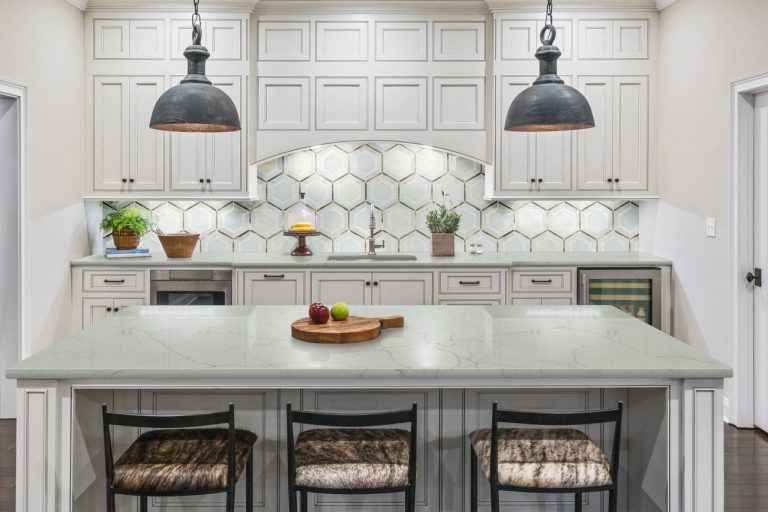
Quartz offers incredible design consistency. Because it’s manufactured, every slab of a given pattern looks identical, which appeals to homeowners who prefer a uniform, predictable appearance. That said, quartz comes in an amazing variety of designs, including options that beautifully mimic natural marble veining or quartzite patterns. So you get natural-looking aesthetics with engineered reliability.
One note for homeowners considering quartzite: it’s a natural stone (not quartz) that falls somewhere between granite and quartz in performance. Like granite, it’s quarried from the earth, but it’s denser and slightly more stain-resistant. Many homeowners love quartzite for its natural stone authenticity combined with better durability. We carry quartzite options in our Stone Gallery alongside granite and quartz.
The engineered composition does have one weakness: extreme heat. Quartz’s polymer binders can be damaged by temperatures above 300°F (150°C). A hot pan placed directly on quartz can leave a discolored mark. This is easily avoided with trivets or hot pads.
Learn more about our full selection of quartz, granite, and quartzite options online.
Browse the Top South Stone Gallery →
Durability & Hardness Comparison
Both granite and quartz are among the hardest, most durable countertop materials available. Both score approximately 7 on the Mohs hardness scale, putting them on par with many gemstones.
In terms of day-to-day durability for Atlanta kitchens, both perform exceptionally well. Here’s how they compare in specific scenarios:
- Granite: Extremely resistant to heat and can handle hot pans without damage. It is scratch-resistant but can chip if struck hard at an edge. With proper sealing and care, granite easily lasts 25+ years.
- Quartz: Slightly more flexible than granite, which makes it slightly less prone to cracking under impact. However, it cannot tolerate extreme heat (above 300°F). With trivets for hot cookware, quartz performs beautifully in busy kitchens for decades.
- For daily use in Atlanta homes: Both materials are exceptional. The real difference comes down to lifestyle factors (how much you cook with high heat, your household’s activity level) rather than fundamental durability.
Maintenance & Care
This is where granite and quartz diverge significantly. Your choice here should align with your preferred lifestyle and maintenance style.
Granite Maintenance
- Annual sealing required: Granite should be sealed once a year (or every 6–9 months in high-traffic kitchens) to maintain stain resistance.
- Use pH-neutral cleaners: Acidic or alkaline cleaners can damage the sealer over time. Stick to mild dish soap and water, or granite-specific cleaner.
- Blot spills promptly: On unsealed areas, acidic liquids like wine or lemon juice can etch the surface. A quick wipe prevents any concern.
- Overall: Granite care is manageable but does require consistent attention and periodic re-sealing.
Quartz Maintenance
- No sealing, ever: Quartz is non-porous by design. No sealer needed, period.
- Simple cleaning: Soap and warm water, or a non-abrasive quartz cleaner. That’s really it.
- Avoid extreme heat: Use trivets for hot cookware. Avoid placing extremely hot pans or bakeware directly on the surface.
- Overall: Quartz is hands-off in terms of maintenance — a major advantage for busy households.
If low maintenance is a priority, quartz wins this category by a wide margin.
For more detailed care instructions, check out our comprehensive guide to quartz countertop maintenance, which covers cleaning products, stain removal, and long-term care tips.
Quartz Countertop Care & Maintenance Guide →
Appearance & Design Options
Both granite and quartz offer stunning aesthetic options, but they differ in character and consistency.
Granite
- Natural uniqueness: Every single slab of granite is one-of-a-kind. No two pieces are identical, which appeals to homeowners who want a truly bespoke countertop.
- Color variety: Granite comes in virtually every color imaginable. You can find exotic options with bold veining, dramatic color contrasts, or subtle, elegant tones.
- Visual impact: Granite makes a strong aesthetic statement. Many homeowners love the natural character and rich appearance.
Quartz
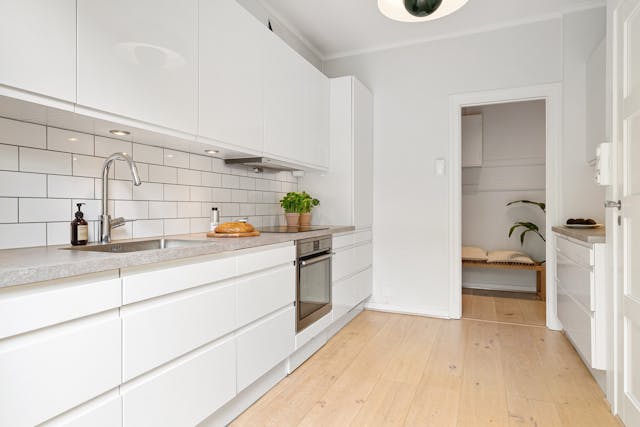
- Design consistency: Every slab matches perfectly, which appeals to homeowners who prefer a uniform, modern look.
- Incredible variety: Don’t think quartz is boring. Designers have created options that mimic marble veining, quartzite patterns, and natural stone aesthetics while maintaining consistent coloring.
- Wide color palette: Quartz is available in every aesthetic you could want, from minimalist whites and blacks to bold jewel tones.
Neither is objectively better — it’s a matter of personal preference. Some homeowners love the natural, one-of-a-kind character of granite. Others prefer the modern consistency and design flexibility of quartz.
The best way to decide: visit our Designer Showroom in Marietta and see full slabs of both granite and quartz in person. Lighting, finish, and the surrounding kitchen context make a huge difference in how a material looks.
Visit the Top South Designer Showroom →
Cost Comparison for Atlanta Homeowners
Cost is often the deciding factor for homeowners. Here’s what you can expect for granite and quartz in the Atlanta area:
- Both typically range from $50–$150 per square foot installed, depending on the specific slab, edge profile, and installation complexity.
- Granite: Entry-level granite slabs may be slightly cheaper than comparable quartz. However, exotic granite options can command premium prices. You’re also factoring in annual sealing costs (typically $100–$300 per year).
- Quartz: Pricing is more uniform and predictable. Fewer surprises, and no ongoing sealing costs.
- Both materials add strong resale value to Atlanta homes. Homebuyers recognize quality countertops and are willing to pay more.
For a detailed estimate on your specific project, Top South offers free consultations and quotes. Our team will help you understand the full cost picture for your kitchen renovation.
Which Should You Choose?
Here’s a quick guide to help you decide between granite and quartz for your Atlanta kitchen: Choose Granite If…
- You love natural stone and want a completely unique countertop.
- You do a lot of high-heat cooking and want the peace of mind that comes with heat-proof surfaces.
- You enjoy the natural character and aesthetic variation of stone.
- You don’t mind annual sealing and are committed to consistent maintenance.
- You’re drawn to exotic stone options with bold veining and color.
Choose Quartz If…
- You prefer low-maintenance surfaces and want to skip the annual sealing.
- You like the modern, consistent aesthetic of engineered stone.
- You have a busy household (kids, pets, frequent entertaining) and want a durable, forgiving surface.
- You want predictable pricing and fewer project surprises.
- You love the look of natural stone but want engineered reliability.
Here’s the honest truth: both are excellent long-term investments. Neither is objectively “better.” The choice comes down to your personal preferences, lifestyle, and maintenance philosophy.
See Both Materials at Top South
The best way to decide between granite and quartz is to see full slabs in person. At Top South, we carry a wide selection of both materials from premium suppliers including Cambria, MSI, and Viatera. Our team of design experts can guide you through the decision process and help you find the perfect material for your Atlanta kitchen.
Visit the Designer Showroom in Marietta to see granite and quartz side by side. Browse our Stone Gallery online for full color and pattern options. Or request a free estimate for your kitchen renovation project.
Whether you choose granite or quartz, Top South will handle everything from design consultation to fabrication and professional installation. We serve homeowners across Marietta, Kennesaw, Alpharetta, Roswell, and all of greater Atlanta.
Frequently Asked Questions
Is granite or quartz more durable?
Both score around 7 on the Mohs hardness scale, making them extremely durable for kitchen use. Granite has a slight edge in heat resistance — you can place a hot pan directly on it without worry. Quartz is slightly more flexible and less prone to chipping at edges, but its resin binders can be damaged by temperatures above 300°F. For everyday durability, both perform exceptionally well.
Which is easier to maintain — granite or quartz?
Quartz wins on maintenance. It’s non-porous and never needs sealing — just wipe with soap and water. Granite requires annual sealing to keep its protective barrier intact, and you need to be more careful about acidic spills. That said, granite maintenance is straightforward once you build it into your routine.
Is granite or quartz better for resale value?
Both materials add strong resale value to Atlanta homes. Quartz is often preferred by buyers who want a modern, low-maintenance kitchen. Granite appeals to buyers who appreciate natural stone and unique patterns. Either choice is a smart investment for your home’s value.
Can I mix granite and quartz in the same kitchen?
Absolutely. Many Atlanta homeowners use one material for the main countertops and another for an island or bar area. For example, granite on the perimeter for its heat resistance near the stove, and quartz on the island for a clean, consistent look. Top South can help you pair materials that complement each other.
How much do granite and quartz countertops cost in Atlanta?
Both typically range from $50–$150 per square foot installed, depending on the slab grade, edge profile, and project complexity. Granite entry-level options tend to be slightly cheaper, while exotic granite and premium quartz can both reach the higher end. Contact Top South for a free estimate based on your specific kitchen layout.